Luca Zedda
Game Writing, narrative design
Narrative Designer at Paintbucket Games, currently working on two unannounced projects.
MA graduate of Digital Games: Theory and Design, with another MA in Creative Writing.
For the most up to date examples of my work see The Darkest Files, or play our demo on Steam!
You can contact me here: [email protected]
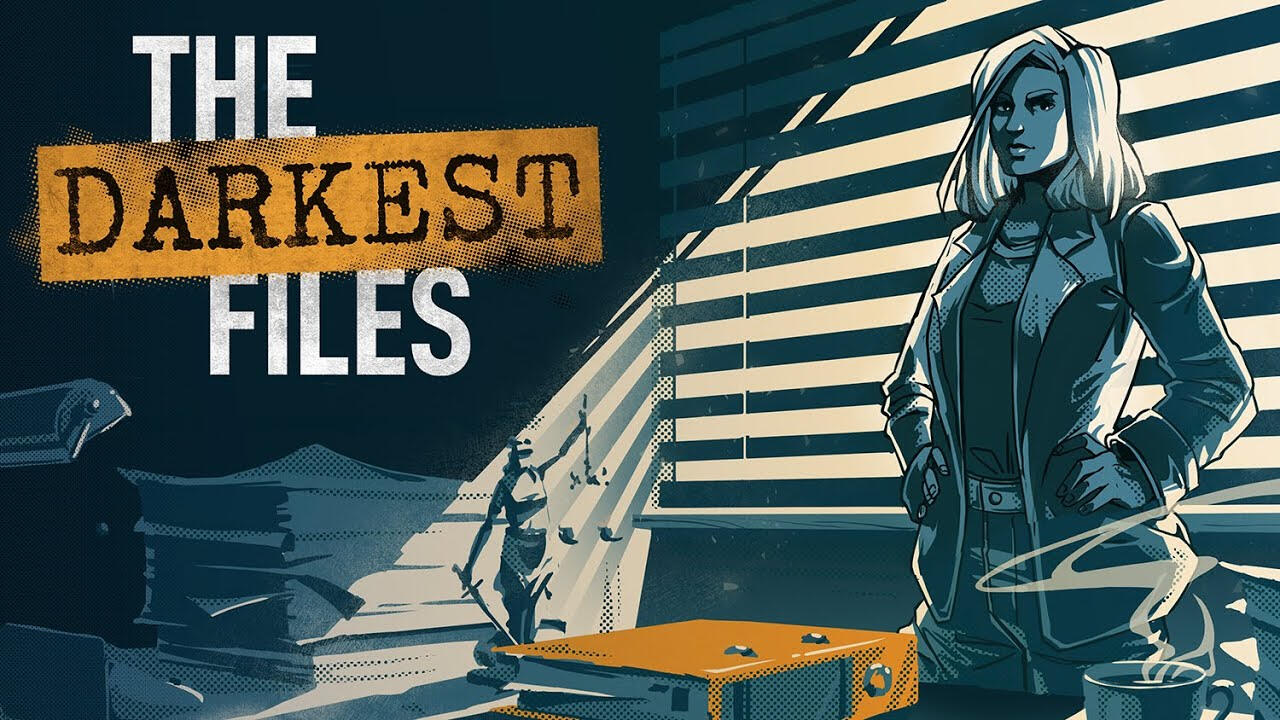
The Darkest Files
Paintbucket Games - Narrative Designer
Nothing belongs to the past, everything is still present and can become the future again.
- Fritz Bauer
Frankfurt, West Germany, 1956
World War 2 has ended. Yet Nazis can still be found in high-ranking positions all across Germany. Hesse's Attorney General Fritz Bauer establishes a special unit of young, unencumbered public prosecutors to pursue and investigate Nazi crimes and to prosecute the perpetrators.
July 2022 - Present
Role: Narrative Designer
Status: Released on Steam
What I work on:
- Writing (ex. dialogues, lore)
- Character (concepting, design)
- Overarching Story (ex. design, implementing)
- Game Design (ex. optional interactions, notepad)
- Editing and peer review, table reads.
Tools:
ArticyDraft, Unity3D, Audacity, Google Workspace
As most of my work is still covered by an NDA, the examples below are taken from the publicly available demo on Steam:
Dialogues
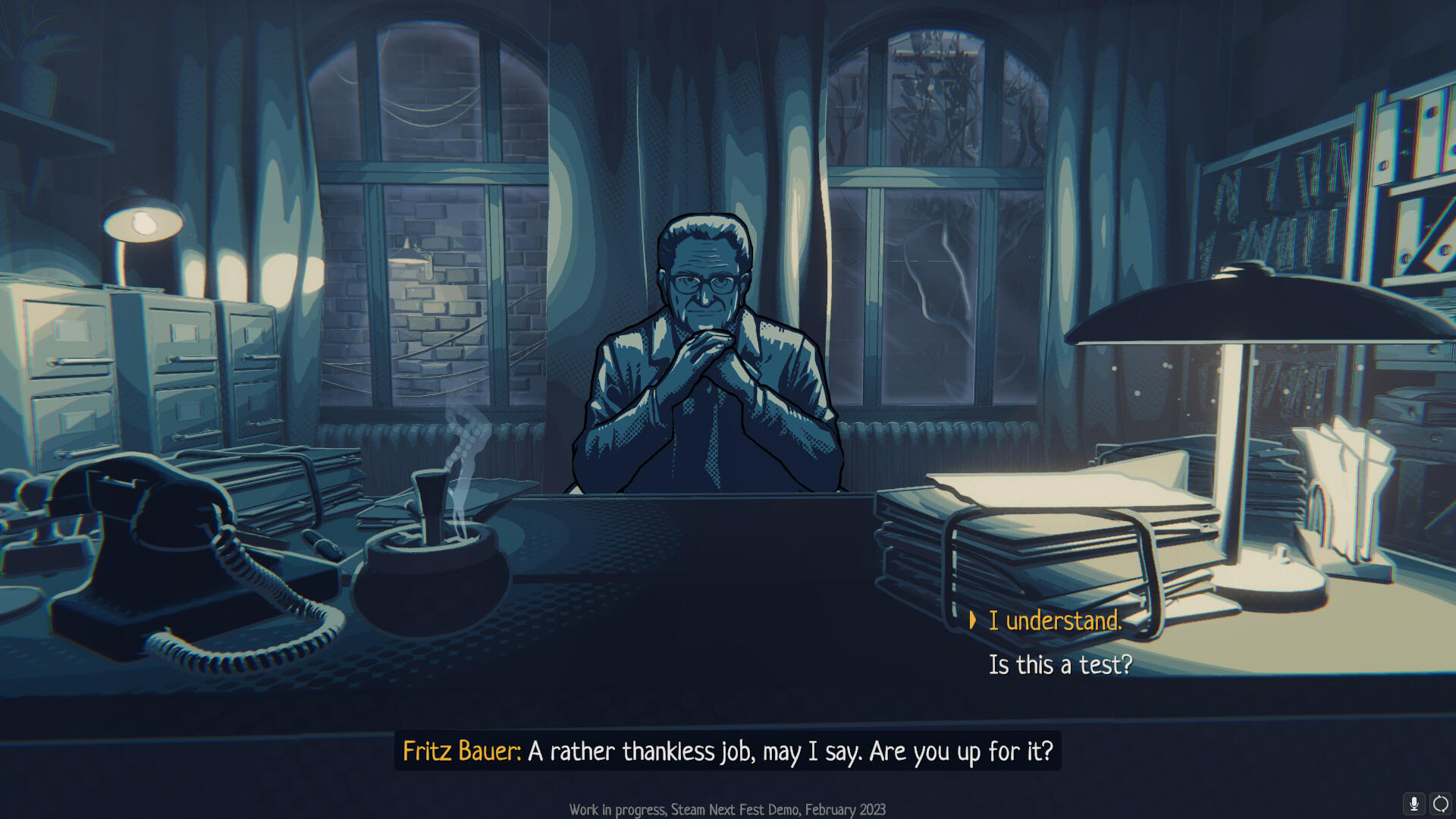
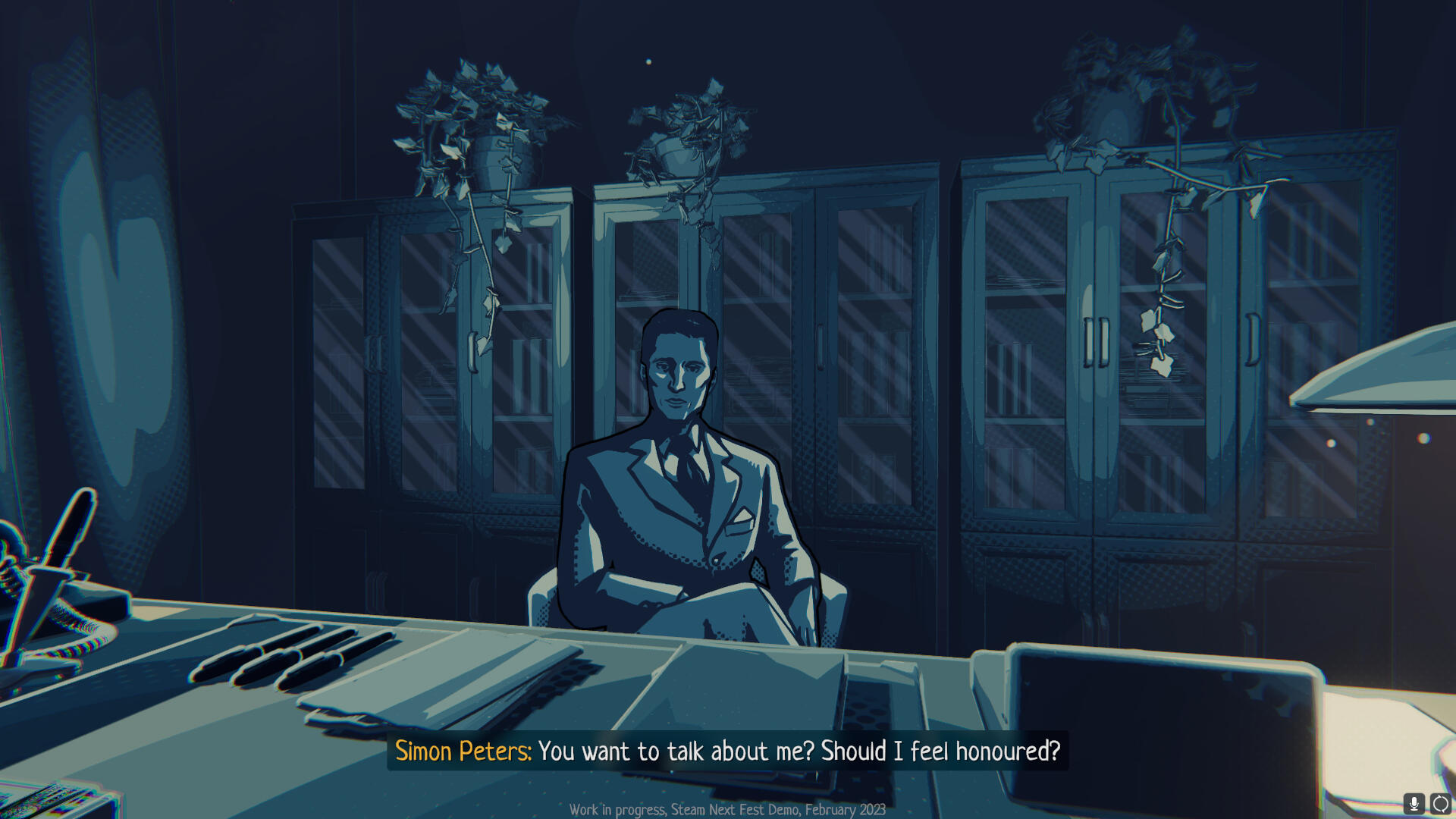
Dialogue writing and logical (occasionally VO as well) implementation is my main responsibility.
I've worked on the majority of the dialogues from the demo, either writing them from scratch or proofreading and editing existing ones.
This includes linear and branching dialogue for events, barks and central 'hubs' for two characters. Through them, I've become adept at creating complex logic structures in ArticyDraft.
Examples (from PalicoPadge's playthrough on Youtube):
Fritz Bauer, Simon Peters, Christoph Wohlmuth, Paula Fischer.
**Characters **
In addition to writing for the established cast, I am tasked with developing new characters for the story.
The majority of them are not included in the demo, apart from the two colleagues: Simon Peters and Christoph Wohlmuth.
Overarching Narrative
I am involved in designing the overarching narrative of the game, as well as responsible for developing the plot for sections further in the game.
This includes working on character backstories, designing the 'riddles' of the case solutions, implementing planned events into the game and utilising existing systems to deliver the story.
Research and World Building
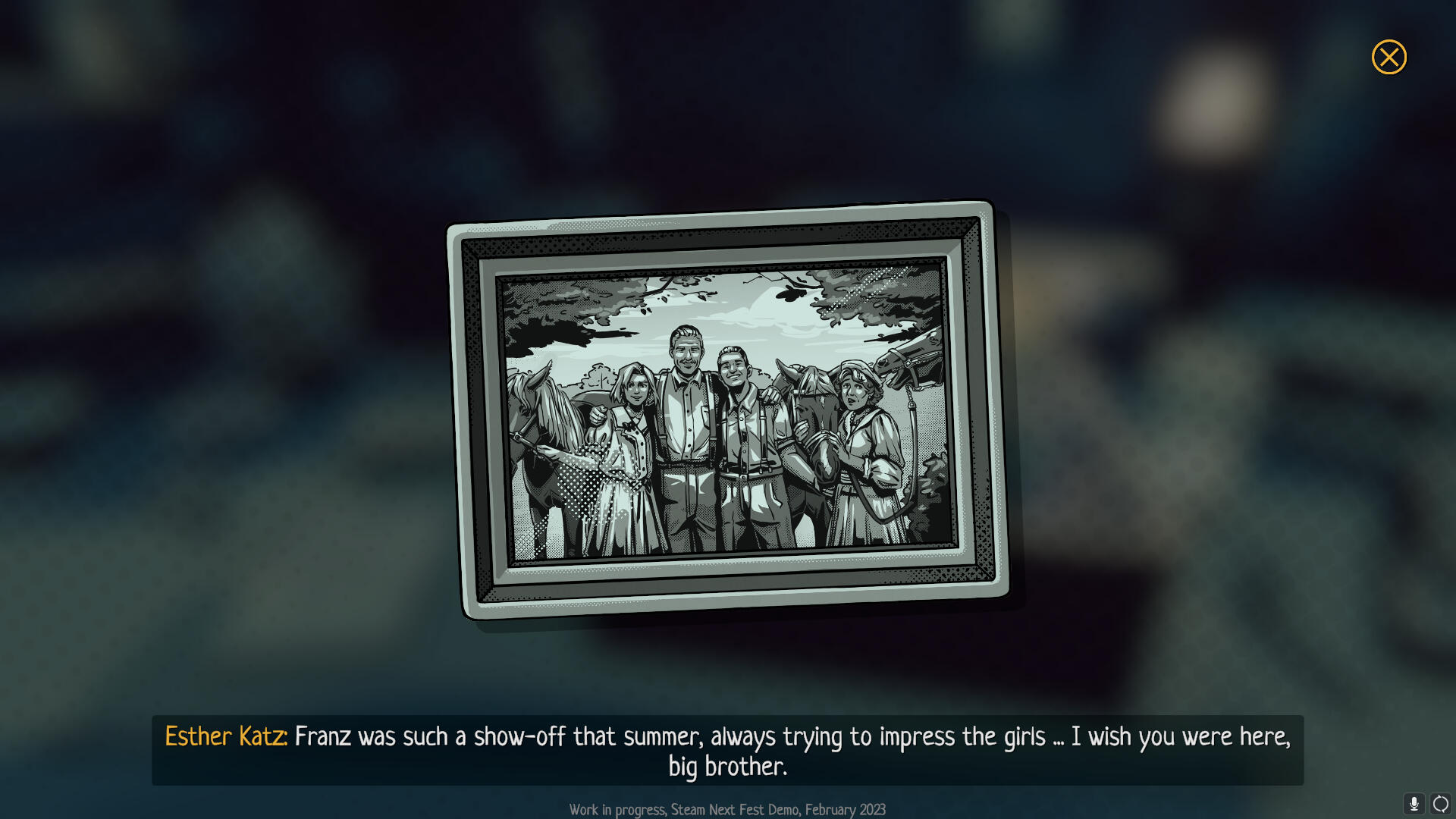
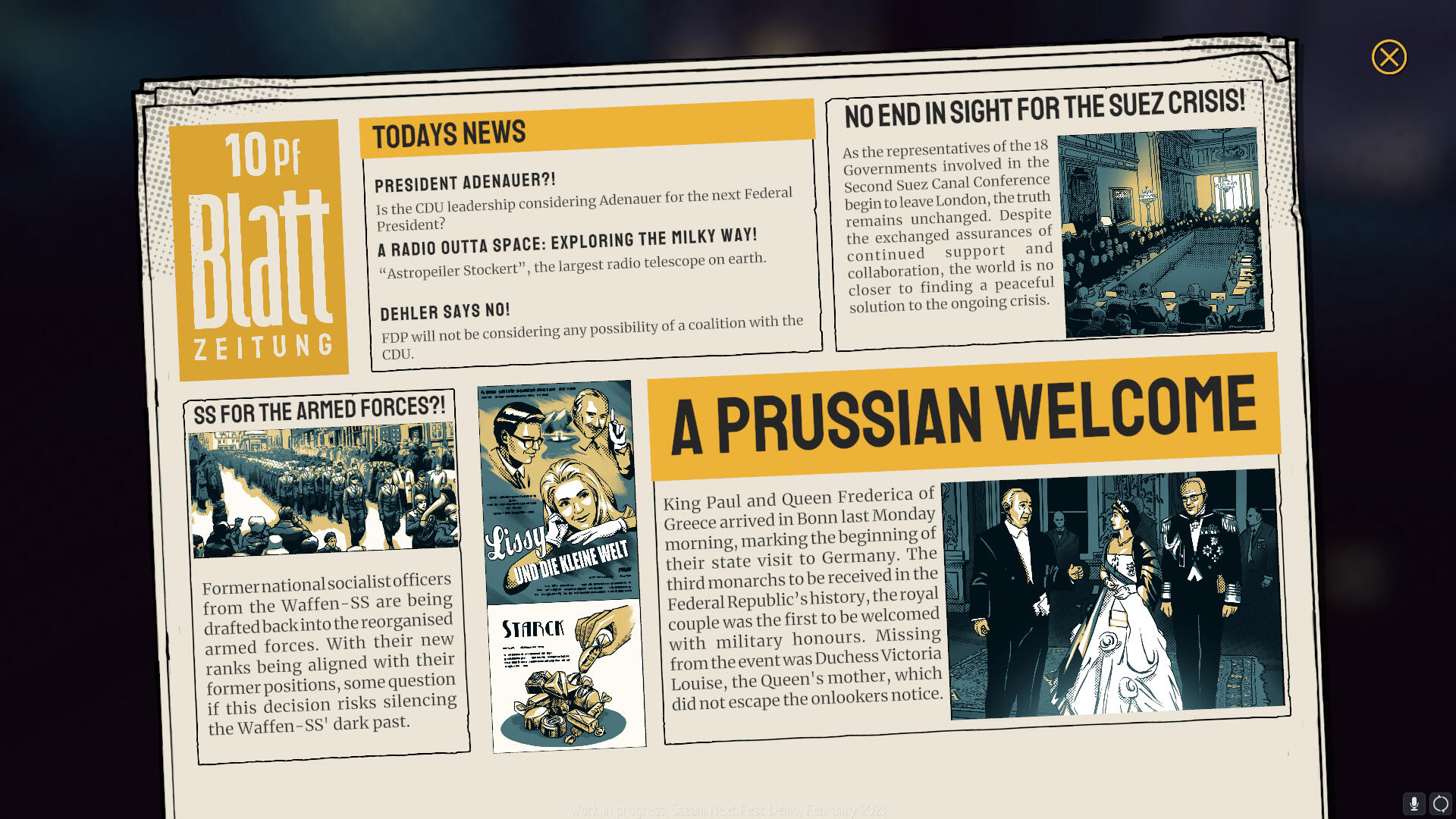
Another task is communicating the world and story through in-game documents and texts: case files, letters, newspapers and notebook entries.
Such texts require a wide variety of voices as well as a substantial amount of research to keep them historically accurate.
Dreamscapes
Gothic Horror - Worldbuilding - Fragmentary Storytelling - Atmosphere
"Have you heard? The Third Moon tricked its two Sisters and imprisoned them upon the firmament. They will claw, bite, and tear, until among the blood-soaked stars only one will reign, emerging from their rotting carcases, donning the crimson name of the Judging Eye.’
-Whispers overheard during the Ball in the House of Thirst
*There are two worlds. The one we walk in, the grey, bleak, tasteless world of concrete and steel known as the Waking, and the ever-vibrant, pulsating, ecstatic expanse of impossibility - the Dreaming. Some among the mortal men, such as you, can traverse the veil between the two of them in their sleep, leaving their bodies behind and venturing through to the other side, before returning to their flesh in the morning. *
They are called Dreamers.
Yet tonight, as the sun starts to crawl back to the skies above our sprawling cities, they find themselves unable to wake up. The Dreaming is ending, the Time of Resolution, its prophesied apocalypse is coming. And if you cannot find a way to awaken, it will devour you as well.
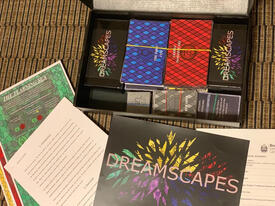
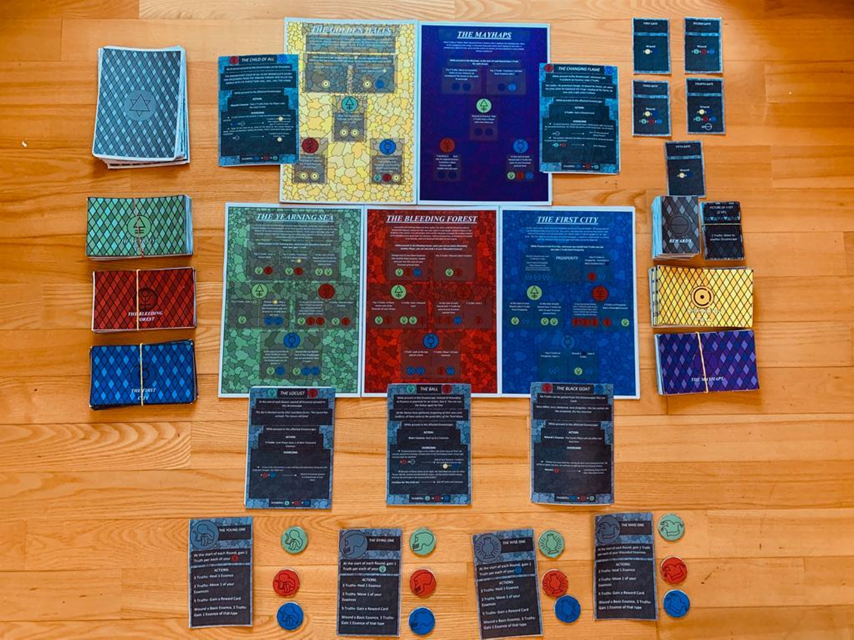
'Dreamscapes' was a solo project for my BA Dissertation in Game Design. A semi-cooperative resource management board game of significant complexity, it features approximately 10 000 words of flash fiction spread across its cards, most of it from the genre of Eldritch Dread.
My focus in the project was to not only explore the plot of the game but also its story, conveying the worldbuilding and many legends of its reality through fragmentary storytelling of 'fluff text'.


The plot of the game focuses on the 'Time of Resolution', an upcoming apocalyptic event that will end the Dreaming, and with it the game. This is represented not only through the fiction but also through the game mechanics - as the game progresses, parts of the board 'collapse', becoming inaccessible, until the entire board is destroyed.


'Dreamscapes' features 5 different regions, the titular Dreamscapes, each being a distinct realm of the setting with unique conventions, atmosphere, and a host of stories. The majority of them is conveyed through flash fiction on Dream Cards, divided into decks corresponding to Dreamscapes, each describing a different event, encounter or another occurrence that may take place within them.Similar texts are also present on Intrusion Cards, representing powerful beings which 'Intrude' on Dreamscapes, the sole significance of whose beings changes the way they function. Many stories of this game are told across several such cards, an example of which is the fate of the S U N and its children, a few of the cards referring to which can be found below.


The Golden Halls
15 Cards


The Mayhaps
15 Cards


The Yearning Sea
20 Cards


The Bleeding Forest
20 Cards


The First City
20 Cards


Intrusions
18 Cards


Late Nights
(WIP)
Slice of life - NArrative voice - inner monologue- Atmosphere


‘Late Nights’ is a solo project which started as part of my dissertation exploring the expressive potential of failure in digital games. It is a bit of an experimental design, with the idea at its core being ‘what if the act of playing itself constituted a failure'. This informed its gameplay loop, which you can find above, removing the victory condition away from the core loop. The project is a work in progress.
In the game, the players take control of a nameless protagonist in a claustrophobically small studio apartment. It begins at 02:07 am, with the character suffering from insomnia, and ends either with them falling asleep or after 5 hours pass and the alarm rings.The player is encouraged to explore the limited area of the apartment, interactions being rewarded with revelations of the character's inner monologue, their thoughts on the situation, emotions and backstory. Doing so however causes the character to become more awake, making it harder to eventually fall asleep.All actions can also affect their mood, in most cases progressing them further into the state of helplessness and self-depreciation, with a potential full-on meltdown.


The topic of ‘Late Nights’ is depression and insomnia. While designing it, it was my focus for all decisions to be informed by them, fully utilising the narrative potential of the procedural nature of the game.Its systems serve as a narrative tool, with the punishment for engaging in the core loop representing the mechanism of a downward depressive spiral, and the core loop itself a common defence mechanism of escapism from intrusive thoughts fuelling insomnia.This is coupled with the protagonist’s narrative voice present in their inner monologue, with its tired and self-loathing remarks.The already mentioned claustrophobic nature of the room is further empowered through the screen clutter of the Thoughts and Goals UI, creating an erratic and frustrating visual and experience.
Short Stories
The Dance
(Horror)
The core idea behind this story is perspective and the concept of 'Beautiful Filth'. Subversing the usual convention of horror pieces being about 'normal' people placed in supernatural situations that threaten their lives, resulting in the focus on fear and attempt to survive, I have instead opted to place the protagonist in the 'know'. As such, the resulting story is not about fear, since Topaz has nothing to fear - she knows the situations, she is experienced with the supernatural. She is an artist, and her craft is exactly that. The story treats it thus not as the terrifying unknown, but as a beautiful spectacle.
Your Very Own End of Times
(Comedy)
An absurd comedy about the incoming apocalypse and a day in the life of a retired couple in the suburbs of London, who must decide how it is going to happen. In this piece I allowed myself to fall back on more archetypical characters, using their familiarity and relatability to create a more homely, everyday feeling to the situation. The core concept behind this story was to make it about everything except the apocalypse itself, giving focus instead to the small little things that actually 'matter'. Or at least, those that do to the characters. The dissonance between those two aspects of the situation serves to empower the comedy of the piece.
Here Lies
(Realistic Fiction)
In this piece my main goal was to capture the feeling of the family stories very common among the older generations in Poland, so ones with which I grew up. To this end I was inspired by the situations in many of them, utilising the historical background to properly anchor it in reality. From the beginning I knew that I wanted the narrative voice to sound like a storyteller, reminiscing about a rather tragic past with distance and a sort of melancholy. I believe this contrast between the events and how they are described is what makes this type of story so memorable and real, and I do think it worked in this case.